Book By
John M. Hartinger
Author • teacher • leader
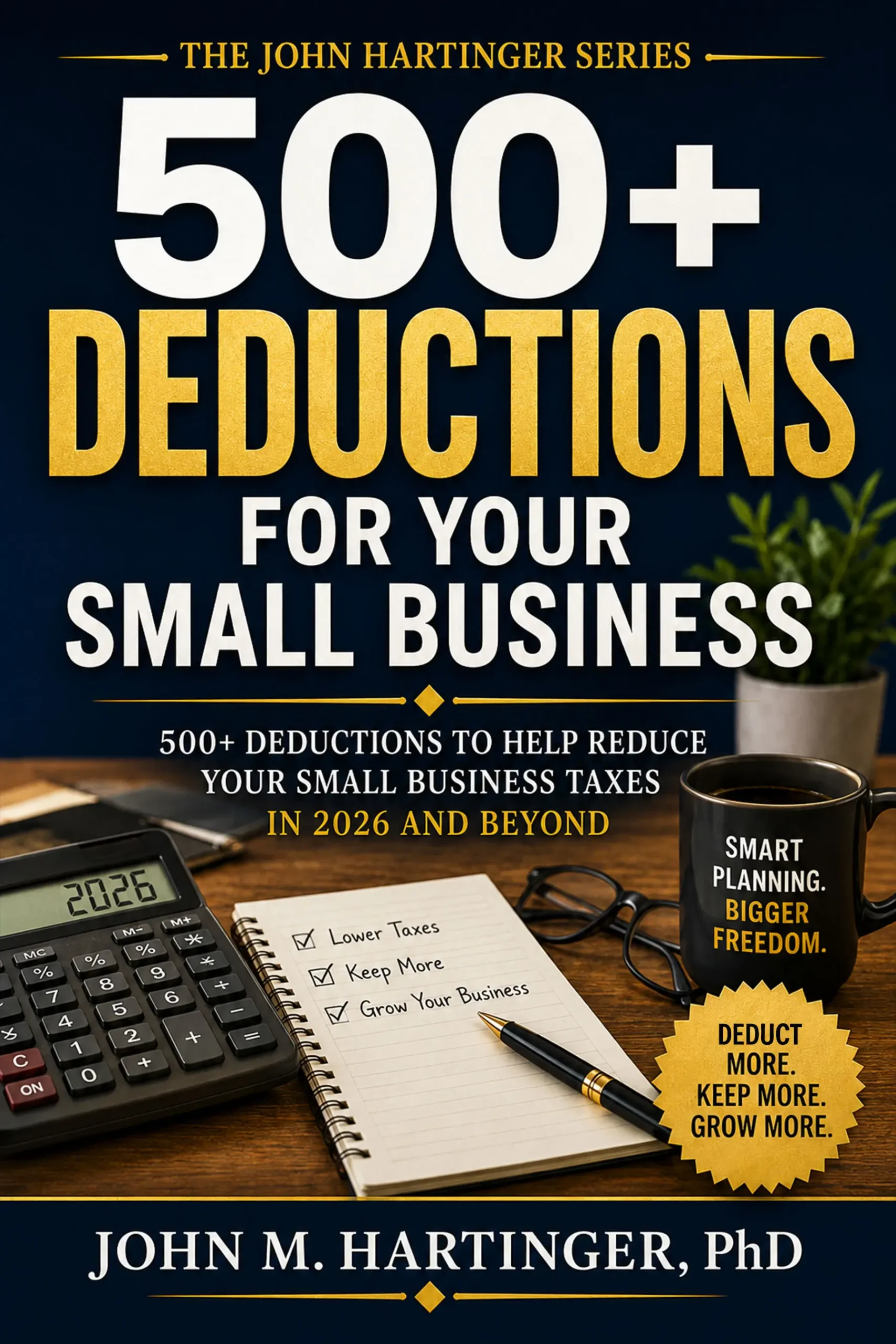
500+ Deductions for Your Small Business
500+ Deductions to Help Reduce Your Small Business Taxes in 2026 and Beyond
500+ Deductions for Your Small Business is a practical reference designed to help small-business owners identify potential tax deductions, organize supporting documentation, and have more informed conversations with their tax professionals. The 2026 edition contains 594 potential deduction and checklist entries, giving owners a broad framework for reviewing expenses that may qualify for favorable tax treatment.
Organized into business-focused categories, the book covers potential deductions involving advertising and marketing, office and administrative expenses, professional and financial services, insurance, employees and payroll, travel and transportation, meals and business gifts, technology and communications, home offices, equipment and supplies, property and depreciation, facilities and utilities, professional development, special business situations, and e-commerce operations. Entries range from everyday expenses such as website hosting, accounting fees, wages, software, and business travel to more complex areas involving depreciation, Section 179, amortization, business property, startup costs, tax credits, and business succession planning.
Rather than presenting every listed expense as automatically deductible, the book teaches owners to evaluate each item carefully. Readers are encouraged to determine whether an expense was actually incurred for business purposes, whether it is ordinary and necessary or otherwise allowed, whether special limitations or capitalization rules apply, and whether the amount, date, purpose, and business-use percentage can be properly documented.
Designed as a working checklist rather than individualized tax advice, 500+ Deductions for Your Small Business helps entrepreneurs become more organized, more aware of potential deductions, and better prepared when working with a CPA, enrolled agent, tax attorney, or other qualified professional. Its central goal is simple: help business owners recognize opportunities they may otherwise overlook while maintaining the records and professional guidance necessary to claim eligible deductions correctly.